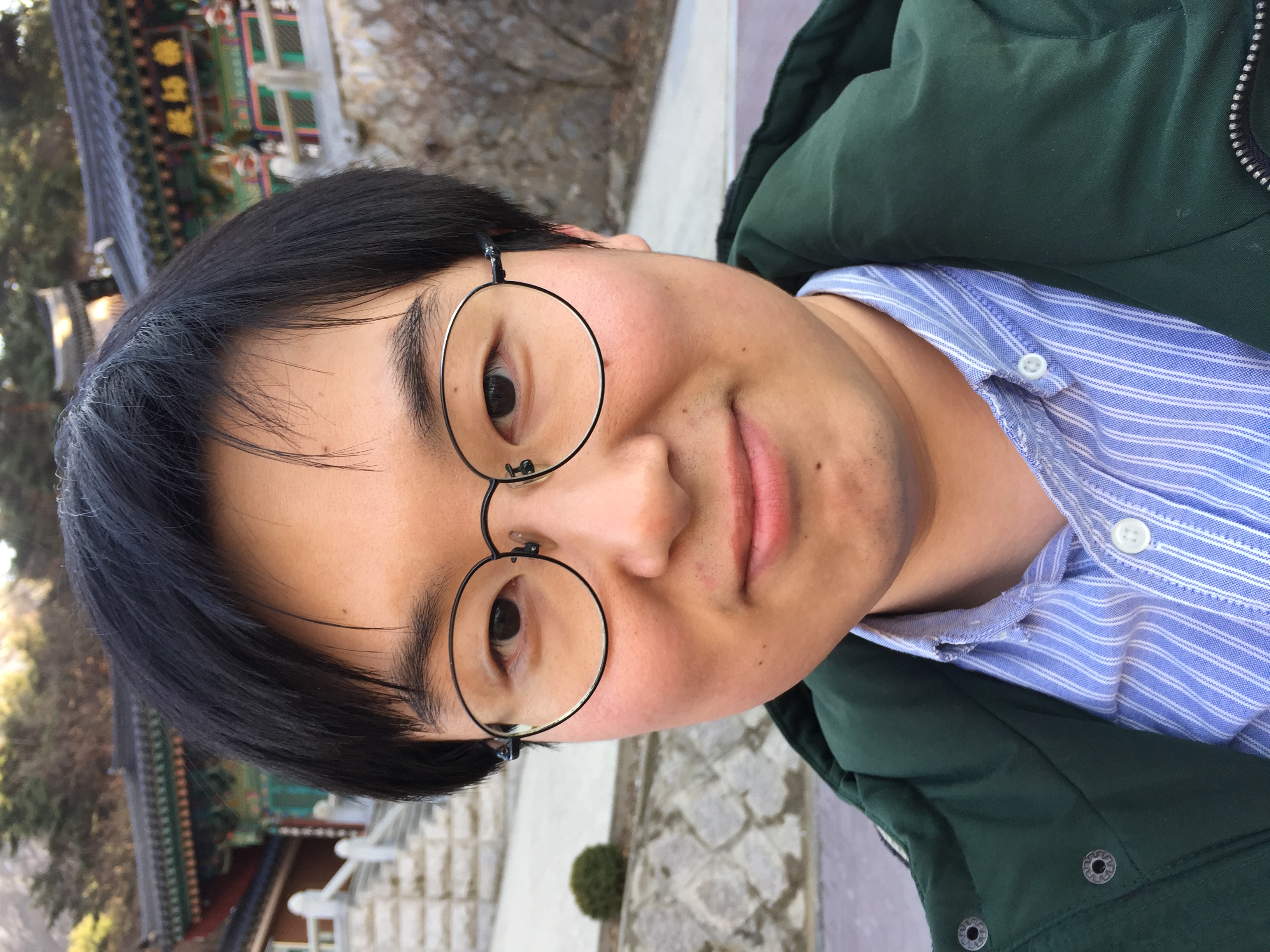
I am Woomin Park (pronounced [pag-u-min] in Korean), a Ph.D. student in the Department of Philosophy at Purdue University. My research sits at the intersection of metaphysics, epistemology, and the philosophy of science.
My earlier work in the metaphysics of science explored the possibility of unifying metaphysical grounding and causation, specifically defending causal and grounding contingentism against the challenges posed by grounding necessitarianism. Building on this, I am writing a paper that examines the mutual tensions between Anti-Humean indeterministic law-instance explanations, grounding necessitarianism, and explanatory realism, assessing which of these metaphysical commitments should be retained or revised.
My current epistemological projects explore the epistemically normative dimensions of belief and inquiry, especially of teaching and learning. The prevailing view often dismisses the epistemic normativity of inquiry on the grounds that inquiry is an action rather than a belief. Against this, I believe that the domain of epistemic normativity validly extends beyond beliefs, and the normativity of inquiry is a hybrid one, combining instrumental and epistemic dimensions. Furthermore, in response to critiques of educational practices—such as “truth indoctrination”—a considerable debate regarding the epistemic aims of education has emerged among both “philosophers of education” in the Department of Education but also among philosophers in the Department of Philosophy. Various aims have been proposed and debated, including justified belief (Schmitt), critical thinking (I. Scheffler, Lipman, Siegel), true belief (Goldman), knowledge (Hirst, Goldman, Bakhurst), understanding (Elgin, Pritchard), and intellectual virtue (Baehr, Battaly, Pritchard). While this debate in education is fundamentally linked to core epistemological debates regarding the aims of belief and the aims of inquiry, the two fields unfortunately remain somewhat disconnected in current scholarship. I contend that this philosophical discourse should not be confined to philosophers; it must be deeply informed by and applied to actual educational practice.
Before pursuing philosophy, I trained to be a physics teacher at Korea National University of Education. Then I earned a B.A. in philosophy from Yonsei University and an M.A. in philosophy from Seoul National University. Following my master’s degree, I was a teaching associate of humanities at Pohang University of Science and Technology (POSTECH) during the pandemic. Before coming to Purdue, I was a doctoral student in philosophy at Seoul National University. I have spent my life navigating the contrast between the stifling competition of a megacity and the relative tranquility of mid-sized urban environments. I was born in Seoul and raised in Incheon, South Korea. Then, I lived four years in Cheongju for my first undergraduate studies, followed by seven and a half years commuting between Incheon and Seoul. After spending a year in Pohang and two years in Tallahassee, Florida, I am now in my second year at Purdue. Although I am drawn to the aesthetic of minimalism in music, architecture, and industrial design, my own outputs tend toward the maximalist.